Is there help that I can get?
Seeking help can be overwhelming, especially in the face of gender-based violence (GBV) and other gender-related concerns. This comprehensive directory serves as an empowering tool designed to connect survivors, witnesses, and first responders to the necessary support services within and beyond UP Diliman. By providing clear pathways to medical, psychosocial, legal, academic, and sanctuary services, this guide ensures that no one has to navigate these challenges alone.
With this resource, we aim to foster courage and empowerment, reminding everyone that help is available, accessible, and ready to address your needs. Let this directory be your companion in reclaiming safety, dignity, and well-being. Together, we can create a supportive and inclusive community where everyone thrives.
Directory
Gender-based violence is a grave concern that demands immediate attention and action. This section provides critical information and resources specifically designed to support survivors of GBV. From emergency response to psychosocial and legal aid, these services ensure survivors have access to safety, healing, and justice. Use this guide to connect with the support you need to reclaim your dignity and well-being.

Download Directory
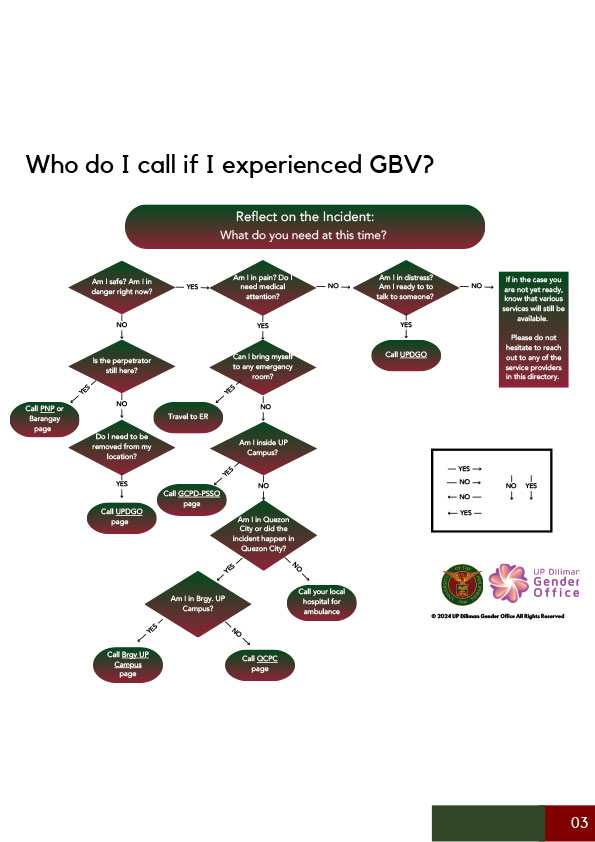
Emergency and Crisis Response
- UPDP Gender and Children Protection Desk
- Hotline: 09621364190
- FB Messenger: https://www.facebook.com/
UPDilimanPoliceGCPD - Services: security assistance
- Barangay UP Campus: Emergency response available 24/7.
- Hotline: 0995 721 9867
- Quezon City Protection Center (QCPC): Crisis assistance for VAWC (Violence Against Women and Children) and GBV survivors.
- Hotline: 09687114785
- Services: Medical care, psychosocial intervention, and legal assistance for survivors.

Counseling and Psychosocial Support
- UPD Gender Office Counseling Program:
- Hotline: 09673009206 (Globe), 09602302343 (Smart)
- Email: dgo_counseling.upd@up.edu.ph
- Services: Crisis counseling, feminist counseling, debriefing sessions for survivors, and support for witnesses.
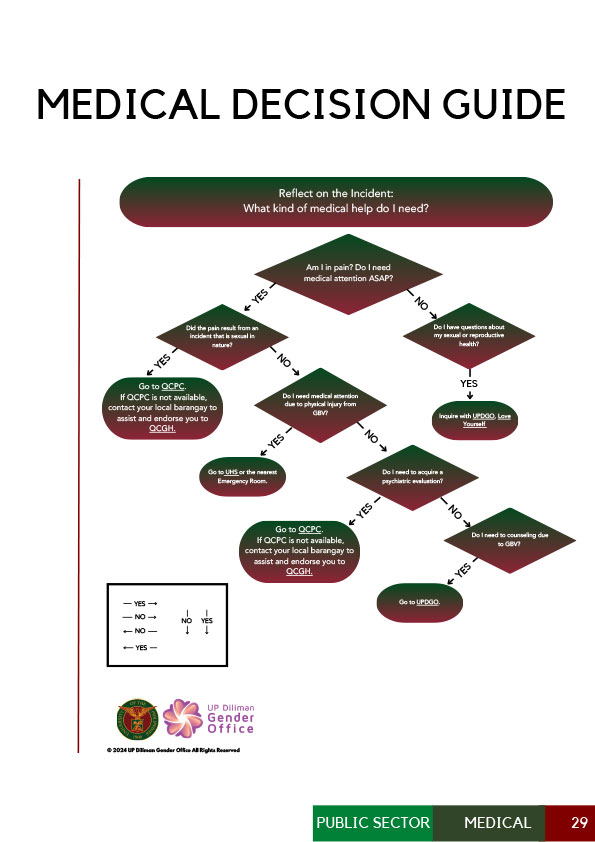

Medical Services
- UP Health Service:
- For initial medical assessment and referrals related to GBV incidents.
- Quezon City General Hospital:
- Provides emergency medical attention for GBV survivors, including post-exposure prophylaxis (PEP) and support for forensic exams.
Legal Assistance
- UPD Office of Anti-Sexual Harassment (OASH):
- Assists in filing complaints related to GBV incidents within the UP system.
- Steps for processing affidavits and pursuing formal charges against perpetrators.
- Barangay UP Campus:
- Assistance with barangay protection orders (BPOs) for immediate safety.

Shelter and Safe Spaces
- Coordination for Temporary Shelter:
- Referrals to temporary safe spaces for survivors fleeing abuse.

Reporting Procedures
- Clear steps survivors can take to report GBV, including who to contact first and what documentation (if any) may be required.
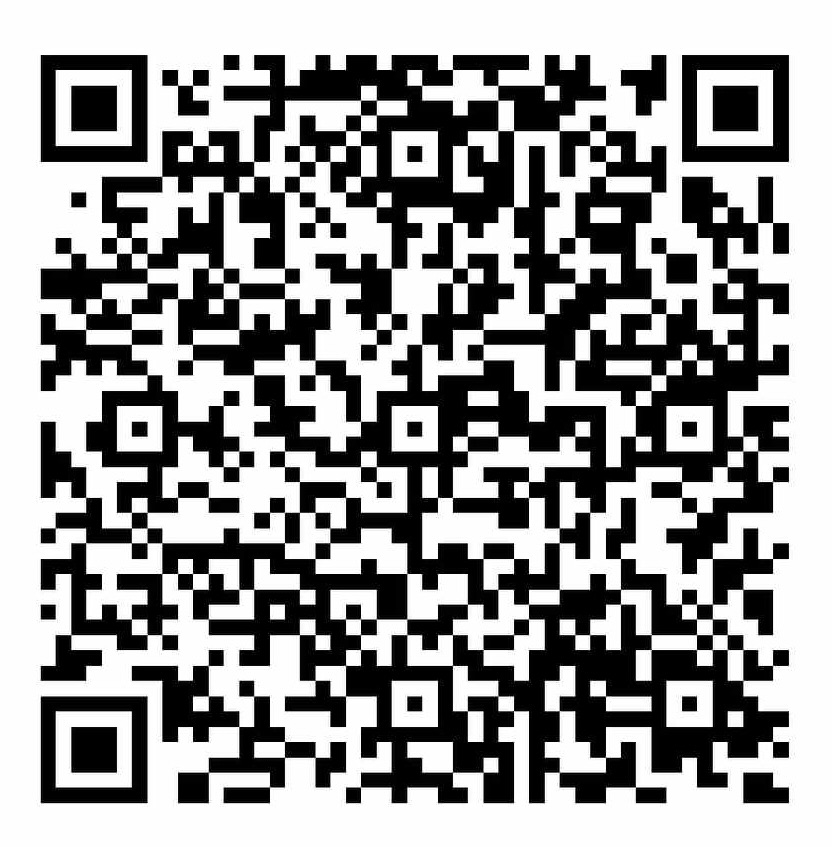
For more comprehensive details about available GBV-related services, including contact numbers and specific support programs, scan the QR code below. This ensures you can access all the resources you need with ease and convenience.
QR code and link of the Gdrive for folder of GBV protocol and Directory:
View Directory
Evidence Collection
If you are not yet ready to file formal charges but want to ensure that evidence is preserved, this section provides a detailed guide on critical evidence to collect. Preserving evidence is essential to safeguarding your options for the future, even if you decide to take legal action later. It also ensures that investigators and responders have the necessary materials to support your case. Below, you will find a comprehensive overview of evidence collection procedures, including what trained responders can collect and what you can safely collect yourself.
Body as evidence
Where do they collect evidence?
- Mouth
- Saliva will be checked and collected especially if kissed or made to take in any genital or body part without consent
- Female or male genitals including anus and breasts
- Semen, saliva, lubricant or any fluid in these areas should be collected as evidence
- Nails
- Look for nail cuttings and scrapings
- Debris under the nails can be collected by putting them in a clean paper
- Bite marks
- Saliva that could still be in the bite mark could be documented and collected
- Urine
- Test the urine of the survivor for any trace of toxicology, spermatozoa (moving sperm), and pregnancy
- Clothes
- Condoms
When can you collect evidences?
- Semen stains should be collected within to avoid losing the evidence:
- 72 hours—vaginal
- 48 hours—rectal
- 12 hour—oral
- Saliva and saliva stains in any body part, clothes and other inanimate objects (The Royal College of Pathologists of Australia, 2022)
- Saliva from mouth from 12 hours to 48 hours after oral assault (penile)
- Saliva on penis within 72 hours after penis had been taken orally
- Saliva on skin within 48 hours after assault took place
- Saliva will be checked and collected especially if kissed or made to take in any genital or body part without consent
- Semen, saliva, lubricant or any fluid in these areas should be collected as evidence
- Look for nail cuttings and scrapings
- Debris under the nails can be collected by putting them in a clean paper
- Saliva that could still be in the bite mark could be documented and collected
- Test the urine of the survivor for any trace of toxicology, spermatozoa (moving sperm), and pregnancy
- Semen stains should be collected within to avoid losing the evidence:
- 72 hours—vaginal
- 48 hours—rectal
- 12 hour—oral
- Saliva and saliva stains in any body part, clothes and other inanimate objects (The Royal College of Pathologists of Australia, 2022)
- Saliva from mouth from 12 hours to 48 hours after oral assault (penile)
- Saliva on penis within 72 hours after penis had been taken orally
- Saliva on skin within 48 hours after assault took place
Note:
- This information is collected from the discussion of Dr. Raquel Fortun during the UPDGO’s Gender-Based Violence First Responder Training: Professional Development Training Series last November 2022.
- Proper storage of evidence is crucial to preserving its integrity, and this often requires scientific techniques to prevent contamination or degradation. For this reason, we strongly encourage you to have evidence collection handled by trained experts whenever possible.
Introduction to Legal Protections Against Gender-Based Violence
Laws and policies play a vital role in addressing and preventing gender-based violence (GBV). They provide a framework for protecting the rights and dignity of individuals, holding perpetrators accountable, and ensuring support for survivors. In the Philippines, a robust legal foundation, coupled with institutional policies, underscores the commitment to combating GBV in all its forms. Below is an overview of key laws and policies aimed at addressing GBV and related concerns.

Philippine Laws
- The 1987 Philippine Constitution: Enshrines the rights to equality, human dignity, and protection from violence.
- Safe Spaces Act/“Bawal Bastos Law” (Republic Act 11313): Addresses gender-based harassment in both public and online spaces.
- Anti-Violence Against Women and their Children Act of 2004 (Republic Act 9262): Provides protection for women and children from physical, emotional, and economic abuse.
- Anti-Sexual Harassment Act of 1995 (Republic Act 7877): Criminalizes acts of sexual harassment, especially in work, education, and training settings.
- Anti-Rape Law of 1997 (Republic Act 8353): Defines rape as a crime against persons and expands its legal definition.
- Rape Victims Assistance and Protection Act of 1998 (Republic Act 8505): Mandates support services for rape survivors.
- Magna Carta of Women (Republic Act 9710): A local adaptation of CEDAW (Convention on the Elimination of All Forms of Discrimination Against Women) promoting women’s rights and gender equality.
- Articles 364 and 245 of the Revised Penal Code (Republic Act 3815): Address defamation and acts of lasciviousness, respectively.
- ICT Laws:
- Anti-Photo and Video Voyeurism Act of 2009 (Republic Act 9995)
- Anti-Online Sexual Abuse or Exploitation of Children and Anti-Child Sexual Abuse or Exploitation Materials Act (Republic Act 11930)
- Cybercrime Prevention Act (Republic Act 10175)

UP Policies
- UP Anti-Sexual Harassment (ASH) Code: Establishes guidelines and penalties for sexual harassment within the university.
- Memorandum No. OVCAA-MTTP 21-029: Affirms the rights of transgender and gender non-conforming students to use their names, pronouns, and titles.
- U.P. Gender Guidelines: Promotes women’s empowerment and gender equality within the University of the Philippines.
These laws and policies represent crucial steps toward creating safer, more equitable environments for all. By familiarizing yourself with these protections, you empower yourself and others to take action against GBV, promote accountability, and foster a culture of respect and equality.