Understanding the reasons why I reacted that way
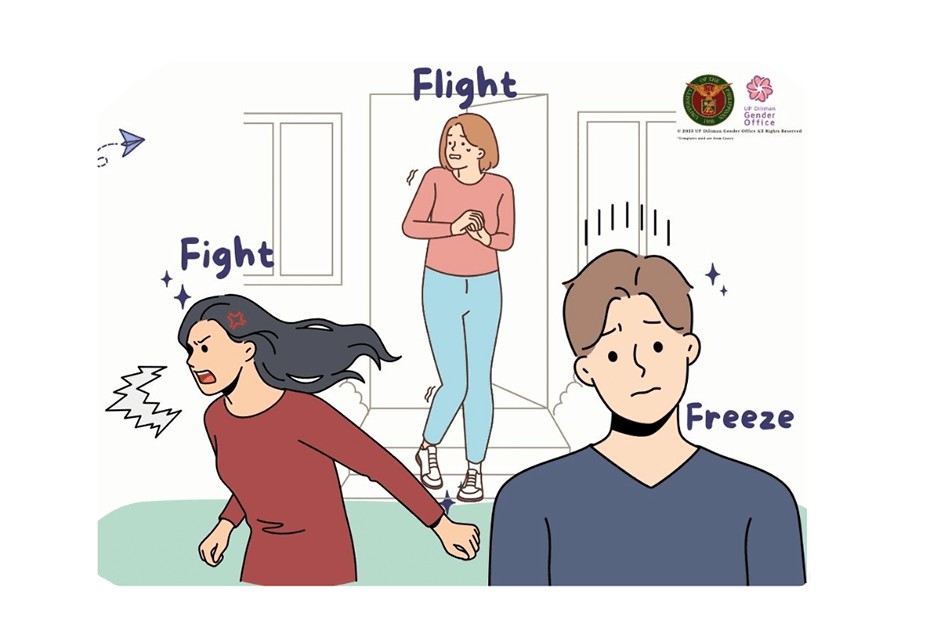
When faced with gender-based violence (GBV), individuals may experience one or more trauma responses as their brain and body react to perceived danger. These responses—fight, flight, freeze, and fawn—are survival mechanisms designed to protect the individual, but they may also leave survivors questioning their actions or inactions during or after the event.
A. Responses
Fight
The fight response is our body’s physical reaction to a perceived danger that our brain believes we can confront. This response prompts us to actively resist the threat, often manifesting as physical actions or intense emotions. In the context of GBV, a fight response may include attempts to defend oneself, such as
Physical signs include a tense jaw, clenched fists, tension in the stomach, or an overwhelming desire to resist or retaliate. While this response can be empowering, survivors may also feel guilt or self-doubt if their resistance was not enough to stop the abuse (Taylor, 2022).
Flight
Flight represents a physical reaction where the brain assesses the threat as overwhelming and beyond our ability to confront. In GBV situations, this response may involve attempts to escape or flee from the danger (Taylor, 2022; Rape Crisis, n.d.) such as
Physical signs of flight include restlessness, tension, darting eyes, and a constant urge to move. Survivors may experience shame for choosing to flee, but it is important to recognize this as a natural and valid survival response (Taylor, 2022).
Freeze
The freeze response is characterized by immobilization when the brain determines that neither confrontation nor escape is possible. Survivors of GBV may find themselves
This reaction is the body’s way of minimizing harm by “playing dead” or blending into the background. Unfortunately, survivors who freeze may later struggle with feelings of guilt or self-blame, questioning why they didn’t fight back or run away. It is essential to understand that freezing is an involuntary and protective response (Taylor, 2022).
Fawn
The fawn response involves attempting to pacify or appease the perpetrator to reduce the threat of further harm. In GBV situations, this may look like
For many, the fawn response is rooted in learned behavior from past trauma, such as childhood experiences of abuse or neglect. Survivors may feel conflicted or ashamed for “giving in,” but it is vital to acknowledge that this response is a survival mechanism aimed at minimizing harm (Marschall, 2023).
Recognizing that these reactions are trauma responses can help reduce self-blame, foster self-compassion, and support your journey toward healing. Remember, your responses were not choices but instinctive survival mechanisms. If you feel the need to further process your experiences and emotions, you can access counseling through the resources provided in this link.
B. Understanding Feelings
This toolkit delves into the topic of feelings because emotions are at the core of how individuals process and navigate their experiences, especially those related to gender-based violence (GBV). Recognizing and validating feelings is a crucial first step toward healing, empowerment, and taking action. Feelings not only help us identify when boundaries have been crossed but also provide insight into the impact of such experiences on our mental and emotional well-being.
For those on the receiving end of GBV, understanding their feelings can clarify the reality of their experiences, reduce self-blame, and foster self-compassion. For witnesses, reflecting on their emotions can motivate meaningful support and advocacy for survivors. Acknowledging these feelings, whether they are confusion, fear, anger, or helplessness, creates space for awareness, understanding, and ultimately change. By addressing these emotions, this toolkit aims to equip readers with the language and perspective needed to process their experiences and support others effectively.
What am I feeling?
For people who might or might not have been aware that they were or are on the receiving end of GBV, the following feelings and thoughts might have been experienced:
Meanwhile, people who have witnessed instances of GBV, might have been felt the following:
For people who have been on the receiving end of GBV and were not able to find a way out or escape, the following feelings and thoughts might have been experienced:
Note: Those stated above are answers gathered from the interviews conducted by the current toolkit’s authors.
To read and understand more about these acts of gender-based violence, you may access this:

GBV Prevention & Response Materials